

Unexpected disruptions can affect any business, regardless of its size or industry. A network failure, power outage, security incident, or equipment breakdown can interrupt daily operations and create financial losses. Even a short interruption can delay customer orders, affect employee productivity, and damage customer confidence.
The best way to reduce business downtime is to identify critical systems, protect vulnerable areas, and prepare clear recovery procedures before something goes wrong.
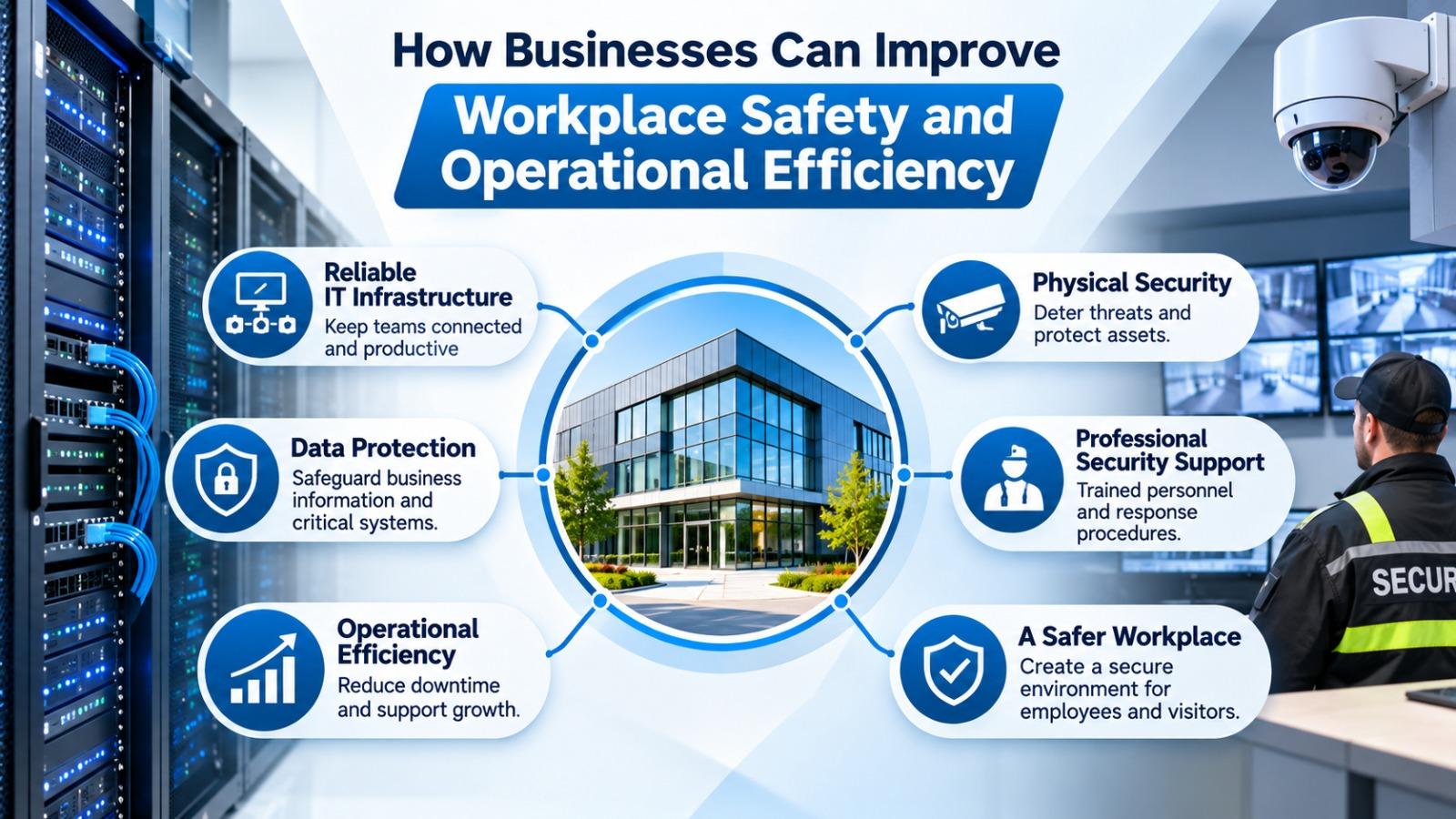
Reliable IT infrastructure and effective physical security both play important roles in this process. While technology keeps business systems connected, physical protection helps safeguard employees, equipment, and commercial premises.
Businesses that plan for these risks can respond more effectively when unexpected problems occur.
What Causes Unexpected Business Downtime?
Business downtime happens when an organisation cannot perform essential activities because of an operational disruption.
Technology failures are among the common causes. Problems with servers, network connections, storage equipment, or business applications can prevent employees from accessing the resources they need.
Physical incidents can create similar challenges. Unauthorised entry, theft, property damage, or restricted access to business premises may interrupt normal operations.
External factors also matter. Power interruptions, extreme weather, supplier delays, and communication failures can affect businesses that depend on specific equipment or services.
These problems often become more serious when organisations lack backup arrangements.
For example, a company that depends on one internet connection may struggle to process customer orders when that connection fails.
Identifying these weaknesses before an incident allows businesses to make practical improvements and reduce their exposure to disruption.
Identify the Systems Your Business Cannot Operate Without
Not every business system has the same level of importance.
A company may be able to operate temporarily without an internal reporting dashboard, but losing access to its order management platform could stop customer transactions.
Businesses should identify which activities are essential and determine which systems support them.
Consider a distribution company that depends on warehouse software, network connectivity, and communication equipment to manage deliveries. If one of these systems becomes unavailable, employees may struggle to process orders or coordinate shipments.
Understanding these dependencies helps management decide which systems need stronger protection and faster recovery arrangements.
It is also useful to consider how long each activity can remain unavailable before the consequences become serious.
This information provides a practical foundation for business continuity planning.
Build Reliable IT Infrastructure
Reliable technology helps businesses maintain productivity and reduce avoidable interruptions.
Computers, servers, network switches, routers, and storage systems support communication and information management across an organisation.
If the underlying equipment becomes unreliable or cannot handle current workloads, employees may experience slow applications, dropped connections, and unexpected outages.
Choosing a suitable IT Hardware Solution can help businesses align their equipment with operational requirements.
Before purchasing equipment, organisations should consider compatibility, expected performance, maintenance needs, and future expansion.
For example, a growing office may need additional network connections and greater capacity as more employees use shared applications.
Businesses should also review the support status of existing equipment. Older devices may present maintenance challenges when replacement parts or software updates become difficult to obtain.
The objective is to build infrastructure that supports everyday operations without creating unnecessary complexity.
Reduce the Risk of Network Failures
Network interruptions can affect several business activities simultaneously.
Employees may lose access to cloud applications, shared files, communication platforms, and connected equipment when network services become unavailable.
Businesses should begin by identifying important connections and understanding whether any single device creates a major point of failure.
For example, if an office relies on one network switch to connect its most important workstations, a failure could affect the entire department.
Depending on operational requirements, additional equipment or alternative connections may help reduce this risk.
Regular maintenance is equally important.
IT teams should review network performance, check equipment condition, maintain supported software versions, and document important configurations.
Clear network records make troubleshooting easier because technicians can identify affected devices and connections more quickly.
Protect Commercial Premises Against Physical Risks
Technology is only one part of operational reliability. Businesses also need to protect the physical locations where employees work and equipment is stored.
Offices, warehouses, retail properties, and industrial facilities can face different threats depending on their location, layout, and operating hours.
For example, a warehouse containing valuable inventory may require stronger access procedures than a small administrative office.
Businesses should assess entrances, storage areas, loading points, and locations containing important equipment.
Security planning should also consider what happens outside normal working hours.
A property left unattended overnight may need different protective arrangements from a building that operates continuously.
A practical site assessment helps identify vulnerabilities and determine which measures are appropriate for the premises.
Choose Security Arrangements Based on Business Needs
Professional physical protection can help organisations manage property risks and respond to incidents.
Different businesses require different levels of support.
Some premises benefit from trained personnel who monitor entrances and manage visitors. Other locations may require regular patrols, alarm response arrangements, or monitoring outside normal operating hours.
Businesses researching Security Services UK should evaluate their property’s risks, operating schedule, and specific protection requirements before selecting a provider.
Important considerations include relevant licensing, staff training, insurance, incident reporting, and response procedures.
A suitable agreement should also clarify who is responsible for managing incidents and communicating with the business.
Security arrangements should support everyday operations while providing practical protection against foreseeable threats.
Create a Business Continuity Plan
A business continuity plan explains how an organisation will maintain essential activities when normal operations are disrupted.
The plan should identify critical services, important contacts, recovery responsibilities, and alternative ways of completing necessary work.
For example, a business that temporarily loses access to its main office may need arrangements for employees to work from another location.
A company experiencing a network outage may require an approved alternative communication method while technical teams restore the affected systems.
The plan should also explain who makes important decisions during an incident.
Clear responsibilities reduce confusion and help employees respond consistently.
Businesses should keep essential contact information and recovery instructions accessible even when normal systems are unavailable.
A useful continuity plan must reflect actual operating conditions, not simply exist as a document that nobody reviews.
Establish Backup and Recovery Procedures
Backups help businesses recover important information following equipment failures, accidental deletion, or certain security incidents.
However, creating backup copies is only one part of an effective recovery strategy.
Organisations should determine which information is essential, how frequently it changes, and how quickly it needs to be restored.
Backup arrangements should also protect against the possibility that primary systems become unavailable or compromised.
For example, storing every backup on the same equipment as the original information can create additional risks if that equipment fails.
Businesses should test restoration procedures periodically to confirm that important data can be recovered.
Recovery plans should also address equipment replacement, software configuration, and access permissions.
The objective is to restore essential services safely and within a timeframe that supports business needs.
Train Employees to Respond to Disruptions
Employees play an important role in maintaining business continuity.
Even reliable technology and appropriate property protection may be less effective if staff do not understand how to report problems or respond during an incident.
Businesses should provide clear instructions covering equipment failures, suspicious activity, emergency contacts, and temporary operating procedures.
Training should match employee responsibilities.
For example, a customer service representative may need guidance on communicating service interruptions, while an IT technician may be responsible for identifying and restoring affected systems.
Managers should also understand when to escalate an issue and who has authority to approve alternative arrangements.
Short practice exercises can help employees become familiar with these responsibilities.
Keep IT and Facilities Teams Coordinated
Technology and workplace security are often managed by different teams, but disruptions can affect both areas.
A power failure may disable network equipment and electronic entry systems. A damaged network connection may interrupt communication with connected monitoring devices.
When responsibilities are unclear, valuable time can be lost determining who should investigate the problem.
Businesses should document which teams maintain important systems and how incidents are reported.
IT personnel may be responsible for technical faults, while facilities and security staff manage building access and physical protection.
Regular communication helps departments understand how their work affects other operations.
This coordination becomes particularly important when businesses expand premises, introduce additional equipment, or change operating procedures.
Test Your Plans Before a Real Emergency
A recovery plan may appear effective until it is tested.
Businesses should review realistic scenarios and examine whether employees can follow the agreed procedures.
For example, management might consider what would happen if the main network connection failed during a busy working day.
Could employees continue essential activities? Would customers receive accurate updates? How quickly could technical teams identify the problem?
A short tabletop exercise allows staff to discuss these questions without interrupting live systems.
The findings can reveal missing contacts, unclear responsibilities, or unrealistic recovery expectations.
Testing should be followed by practical improvements.
The goal is to make procedures more reliable before employees need to use them during a genuine disruption.
Review Operational Risks as the Business Grows
Business requirements change as organisations introduce new technology, employ additional staff, or expand their premises.
These changes can create dependencies that were not present when existing continuity arrangements were developed.
A business opening a second location may need additional network capacity, updated communication procedures, and revised property protection arrangements.
Regular reviews help identify these requirements early.
Management should examine important equipment, supplier dependencies, recovery procedures, and employee responsibilities.
Improvements should be prioritised according to their potential impact on essential operations.
Conclusion
Reducing business downtime requires preparation across technology, workplace protection, and operational procedures.
Businesses should identify their most important activities, maintain suitable infrastructure, protect commercial premises, and establish clear recovery arrangements.
Regular maintenance, employee training, and practical testing can help organisations respond more effectively when unexpected problems occur.
The strongest continuity strategy is one that allows essential work to continue safely while normal services are restored.

