

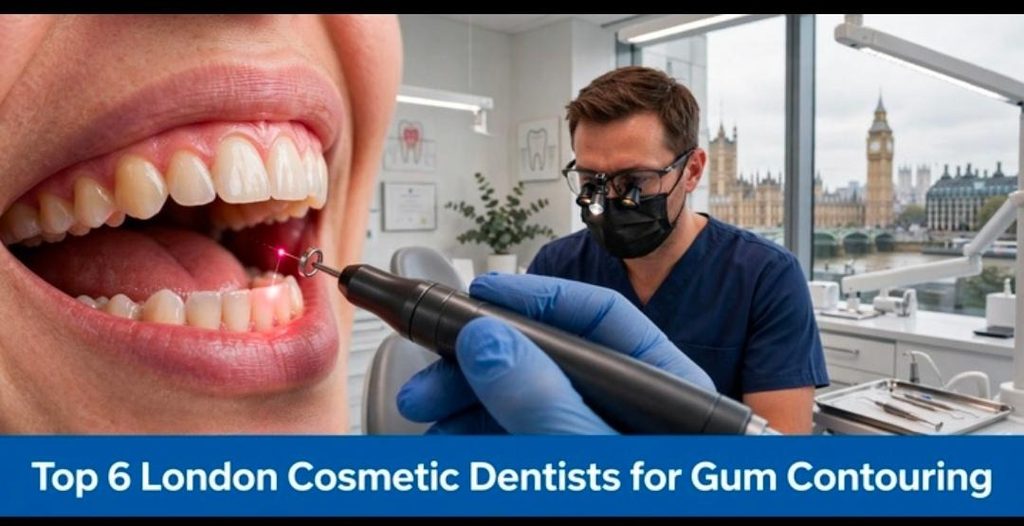
The gum line forms a visible boundary around the teeth. Changing that boundary can alter how long a tooth appears and how it relates to its neighbours, which explains why gum contouring enters some cosmetic dental conversations. It also explains why the plan needs to be precise: the tissue around a tooth is part of its support, not simply a border in a photograph.
Readers considering cosmetic dentistry in London may encounter gum contouring, a gum lift or crown lengthening. These terms do not necessarily describe identical procedures. This guide looks at practices with relevant services and the questions that help make a proposal understandable. Showing gum when smiling does not, by itself, create a need for treatment.
Understanding the Boundary Being Changed
Before choosing a new gum outline, a dentist needs to assess gum health, tooth proportions and the reason for the appearance. A concern about visible gum does not establish that removing tissue is appropriate. The examination should determine whether contouring is a suitable option and what structures would be involved.
Some crown-lengthening procedures involve gum tissue and underlying bone; that should not be assumed of every contouring treatment. The distinction affects the explanation of the procedure and recovery. A digital preview can help discuss the intended appearance, but it cannot replace the clinical assessment of how far a boundary can safely change. The proposed result needs to fit the tissues and the teeth, including any existing restorations.
How These Gum Contouring Practices Were Selected
The selection includes London dental practices with verified gum-contouring or relevant periodontal aesthetic services. The priorities are assessment of tooth and gum relationships, the actual extent of treatment and an understandable account of healing and care. The order follows the decision from defining a proposed gum line to identifying the procedure behind it. These service descriptions identify available routes into care; they do not measure surgical outcomes. The appropriate treatment and its risks must be discussed for the individual case.
Top 6 Cosmetic Dental Clinics in London for Gum Contouring
1. MaryleboneSmileClinic
Gum-lift assessment and treatment form part of the cosmetic dentistry offered in London by MaryleboneSmileClinic, whose process includes evaluating the cause of gum display and discussing a digital proposal. The clinic also describes bone contouring where clinically indicated, making the extent of the proposed work an important part of the consultation.
Its broader Gummy Smile Makeover can involve tooth contouring, whitening and stain removal as well as the gum treatment. Each component has a different purpose. The patient should understand which changes are proposed for the tissue and which would alter the teeth or their colour, rather than treating the package name as a complete explanation.
The clinic’s information also describes review after treatment and continued tissue settling. That gives the appearance discussion a time dimension: the immediate outline and the reviewed result may not be the same stage of healing. Discuss the procedure-specific care instructions, the possibility of sensitivity or gum regrowth, and when the clinician expects to assess the result. The useful plan connects the desired appearance with the biological limits and the follow-up needed to evaluate it.
2. Harley Street Dental Studio
The word laser can draw attention away from a more important detail: what operation is actually proposed. Harley Street Dental Studio offers laser gum contouring and crown lengthening through its periodontal service, so both the instrument and the treatment extent can be discussed.
Laser names a tool. It does not establish how much tissue will change or what recovery will involve. A patient still needs to know whether the proposal is limited to the gum margin or involves a different scope of crown lengthening, and why that approach fits the examination findings.
A brief demonstration of someone else’s gum lift cannot provide that explanation for your own teeth. It may show an immediate visual change while revealing little about the assessment behind it. At a consultation, connect the proposed outline with the procedure and the relevant follow-up. This practice belongs in the shortlist because of its stated periodontal treatment options, with the individual plan needed to explain their use. Discuss discomfort, healing and review in terms of the actual procedure, rather than inferring them from the appeal of the equipment.
3. Pearl Dental Clinic
Pearl Dental Clinic’s periodontal provision includes soft-tissue laser reshaping and crown lengthening. The latter can expose additional tooth structure for restorative purposes, bringing an important connection into view: the gum line may affect an existing or planned crown as well as the appearance of the natural tooth.
For someone with visible dental work, a contouring proposal should account for restoration margins. A change in the surrounding tissue can alter which parts are exposed and how the area looks. That requires individual assessment; an older crown should not be assumed to need replacement merely because gum treatment is being discussed.
Pearl is relevant here because its periodontal and restorative services provide a basis for examining those related decisions. Establish whether the proposed procedure has an aesthetic aim, a restorative aim or both. If further dental work is planned afterwards, clarify how healing will affect its timing. The sequence should be explained around the particular tissues and restoration, rather than arranged solely to reach a preferred appearance as quickly as possible.
4. London Smile Clinic
London Smile Clinic lists surgical gum contouring or a gum lift alongside its smile-design service. This links tissue treatment with the broader visual plan, which is useful when the concern involves the apparent length of several neighbouring teeth.
Changing the gum margin around one tooth may alter its relationship with the tooth beside it. A proposal therefore needs to be viewed across the relevant area, not judged as an isolated strip of tissue. The patient can contribute by describing where the boundary appears uneven and what degree of change they would prefer. The clinician must establish what is appropriate and feasible.
Where tooth-shape changes are also proposed, distinguish their contribution from the gum procedure. A longer-looking tooth could result from a different visible gum margin, a changed biting edge or a combination of actions. Those have different implications. A clear visual plan helps identify the intended appearance, while the treatment explanation should name the work that would create it. Agreeing the picture and understanding the procedure are both necessary parts of a considered decision.
5. DRMR
DRMR lists gum contouring and crown lengthening or a gum lift as separate dental services. Its cosmetic dental provision also includes digital smile design. The separate categories are useful because they encourage a more precise conversation than a general request to show less gum.
Before comparing procedure names or fees, establish the finding being addressed. The dentist should explain why the proposed intervention fits that finding and which teeth or areas are involved. Two treatments can both change the visible gum boundary while having different extents and purposes.
A design discussion can then make the intended result more concrete. You may want a modest change around one tooth, or a more balanced relationship across several. That preference is relevant, but the tissue assessment sets the clinical limits. If the proposed scope differs from your original idea, have the reasons explained before deciding. The value of a defined treatment description is that it gives you something specific to weigh against the expected benefit, the recovery and the option of leaving the appearance as it is.
6. EGO Dental Clinic
EGO Dental Clinic lists gum contouring in the aesthetic zone, as well as cosmetic and functional crown lengthening. These service descriptions make the site and the aim of treatment central to a consultation.
For a patient, that means identifying the actual area under consideration. Is the proposal about one visible margin, several teeth or access to tooth structure for another procedure? A written plan should make that understandable and distinguish the clinical aim from any additional appearance changes. The clinic describes personalised estimates before treatment, giving the proposed scope a place to be recorded.
This is also the point to discuss what happens after the procedure. Confirm who will review healing, what signs should prompt contact and how any planned later restoration would be timed. Follow the instructions given for the actual treatment rather than borrowing an aftercare routine from a different gum procedure. A defined plan should leave the patient knowing both what will change and how the dental team will assess the area as it heals.
Understanding the Proposed Gum Line
At the consultation, ask the clinician to identify the intended boundary on the teeth being considered and explain what tissue would be altered to reach it. Have the reason for the proposed procedure made clear. If bone is involved, that needs to be part of the explanation; if it is not, a description of crown-lengthening surgery should not be assumed to describe your treatment.
Discuss existing crowns or fillings near the gum line and any restorative work proposed afterwards. The treatment sequence may depend on tissue healing. Cambridge University Hospitals’ information on crown lengthening describes possible sensitivity, recession or regrowth, with implications for later restorations. The risks and timing for your own plan should come from the treating clinician.
Finally, establish how the result will be reviewed. The gum line is living tissue, and its appearance can develop during healing. A useful proposal includes the intended change, its limits and the care needed afterwards. That allows a preference about appearance to become an informed decision about a specific dental procedure.
Source note: Official clinic gum-treatment and planning information, with Cambridge University Hospitals patient guidance on crown lengthening.

