

Modern industrial systems are increasingly required to operate under extreme thermal conditions. From continuous high-temperature processing to aggressive chemical environments and repeated thermal cycling, system designers face growing challenges in maintaining reliability and long-term stability. In many cases, failures do not originate from control electronics or automation software, but from structural and functional components that must directly withstand heat, corrosion, and mechanical stress.
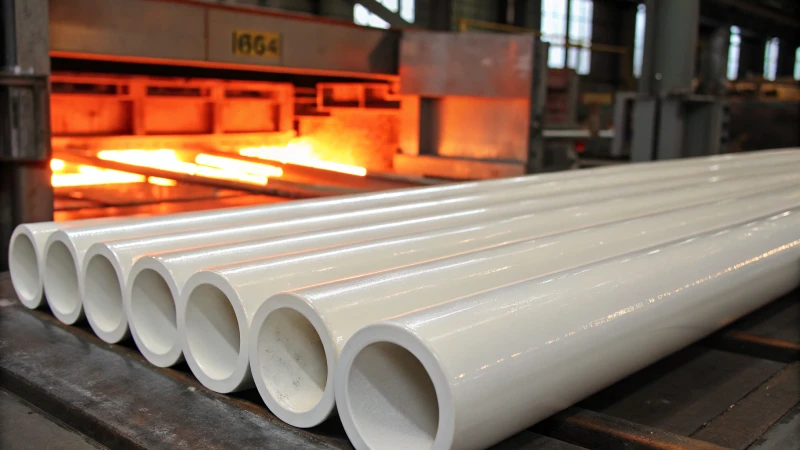
Within these systems, components such as heating elements, sensor housings, protective sleeves, and insulation channels frequently rely on an alumina tube to ensure consistent performance under demanding conditions. Alumina tubes are widely used not because they are exotic materials, but because they offer a balanced combination of thermal stability, electrical insulation, and chemical resistance that few alternatives can match at elevated temperatures.
As industrial processes push toward higher operating temperatures and longer service cycles, the role of alumina tubes has become increasingly critical to system integrity and operational safety.
High-Temperature Challenges in Industrial Systems
High-temperature industrial environments impose multiple, overlapping stresses on materials and components. These stresses often act simultaneously, accelerating wear and increasing the risk of unexpected failure.
Continuous Thermal Exposure
Many industrial systems operate at temperatures exceeding 800 °C, and in some cases well above 1200 °C. Prolonged exposure can cause metals to creep, oxidize, or lose mechanical strength, while polymers may degrade or melt entirely.
Thermal Shock and Cycling
Frequent heating and cooling cycles introduce thermal shock, which can lead to cracking or deformation in materials with poor thermal stability. Dimensional changes caused by uneven thermal expansion may compromise alignment, sealing, or electrical isolation.
Chemical and Oxidative Environments
Chemical processing equipment, furnaces, and energy systems often expose components to corrosive gases, molten materials, or reactive byproducts. Oxidation and chemical attack further reduce the service life of conventional materials.
Electrical Isolation Under Heat
In many systems, electrical insulation must be maintained at high temperatures, particularly for sensors, heaters, and power feedthroughs. Loss of insulation can result in short circuits, signal drift, or safety hazards.
These challenges explain why material selection plays a decisive role in the reliability of high-temperature industrial systems.
Why Alumina Tubes Are Widely Used in High-Temperature Applications

Alumina (aluminum oxide, Al₂O₃) ceramics are among the most established technical ceramics used in industrial environments. When formed into tubular components, alumina offers several performance advantages that directly address the challenges outlined above.
Thermal Stability at Elevated Temperatures
Alumina tubes retain structural integrity at temperatures far beyond the limits of most metals and polymers. High-purity alumina grades can operate continuously above 1500 °C, making them suitable for furnaces, kilns, and thermal processing equipment.
Electrical Insulation
Alumina is an excellent electrical insulator, even at high temperatures. This property is essential for protecting thermocouples, heating elements, and electrical conductors in harsh thermal environments where insulation failure is unacceptable.
Resistance to Corrosion and Oxidation
Unlike metallic components, alumina does not oxidize or corrode in most industrial atmospheres. It remains chemically stable in the presence of many acids, alkalis, and reactive gases, contributing to longer service life and reduced maintenance.
Mechanical Strength Under Heat
While ceramics are often associated with brittleness, alumina maintains significant compressive strength at elevated temperatures. Properly designed alumina tubes can withstand mechanical loads, vibration, and thermal stress when integrated correctly into industrial systems.
Industrial Systems That Depend on Alumina Tubes
Alumina tubes are not isolated components; they function as integral parts of larger industrial systems across multiple sectors.
Industrial Furnaces and Kilns
In high-temperature furnaces, alumina tubes are commonly used as protective sheaths for thermocouples, heating elements, and gas injection lines. Their stability ensures accurate temperature measurement and consistent heat delivery.
Chemical Processing Equipment
Chemical reactors and processing lines often rely on alumina tubes to protect sensors and transfer materials in corrosive and high-temperature environments, where metallic alternatives would rapidly degrade.
Heat Treatment and Thermal Processing
In heat treatment systems for metals, ceramics, and composites, alumina tubes help maintain controlled atmospheres and protect instrumentation from direct exposure to heat and reactive gases.
Semiconductor and Laboratory Equipment
Precision processes such as semiconductor fabrication and high-temperature laboratory analysis demand materials that offer both thermal stability and electrical insulation. Alumina tubes are widely used in these environments for their predictable performance.
Energy and Environmental Systems
Applications in energy generation, emission control, and environmental treatment systems also depend on alumina tubes to handle high temperatures while maintaining system reliability and safety.
Design Considerations for Alumina Tubes in High-Temperature Systems
While alumina tubes offer strong intrinsic properties, their performance in real-world systems depends heavily on proper design and specification.
Material Purity
Higher alumina purity generally improves thermal resistance, electrical insulation, and chemical stability. Selecting the appropriate purity level is essential for matching performance requirements without unnecessary cost.
Wall Thickness and Geometry
Tube dimensions influence thermal shock resistance, mechanical strength, and heat transfer behavior. Engineers must balance robustness with thermal efficiency and system integration constraints.
Thermal Expansion Compatibility
Alumina has a different coefficient of thermal expansion than metals. Proper allowances must be made to prevent stress buildup at interfaces during heating and cooling cycles.
Machining and Tolerances
Precision machining ensures proper fit and alignment within assemblies. Tight tolerances are particularly important in systems where dimensional stability affects performance or safety.
Industrial Solutions for Advanced High-Temperature Applications
As industrial systems become more complex, alumina tubes are increasingly specified as part of integrated, application-driven solutions rather than standalone components. Engineers often evaluate tube design, material grade, and system compatibility together to ensure reliable operation under extreme conditions.
In this context, Industrial Alumina Tube | Solutions for Advanced High-Temperature Applications provides a reference framework for how alumina tube design is aligned with real industrial system requirements, including long-term thermal stability, corrosion resistance, and operational reliability across diverse high-temperature environments.
Maintenance, Reliability, and Long-Term Performance
One of the primary advantages of alumina tubes is their contribution to system longevity. Properly specified and installed alumina components reduce the frequency of maintenance interventions and minimize the risk of unplanned downtime.
Their resistance to thermal fatigue and chemical attack helps maintain consistent performance over extended service cycles. In continuous-operation industries, this reliability directly translates into improved productivity, safety, and cost control.
Conclusion
High-temperature industrial systems demand materials that can withstand extreme heat, chemical exposure, and mechanical stress without compromising performance or safety. Alumina tubes have become critical components in these systems because they combine thermal stability, electrical insulation, and chemical resistance in a form that integrates seamlessly into complex industrial equipment.
As industrial processes continue to evolve toward higher temperatures and greater operational demands, alumina tubes will remain a foundational element in the design of reliable, high-performance high-temperature systems.


